
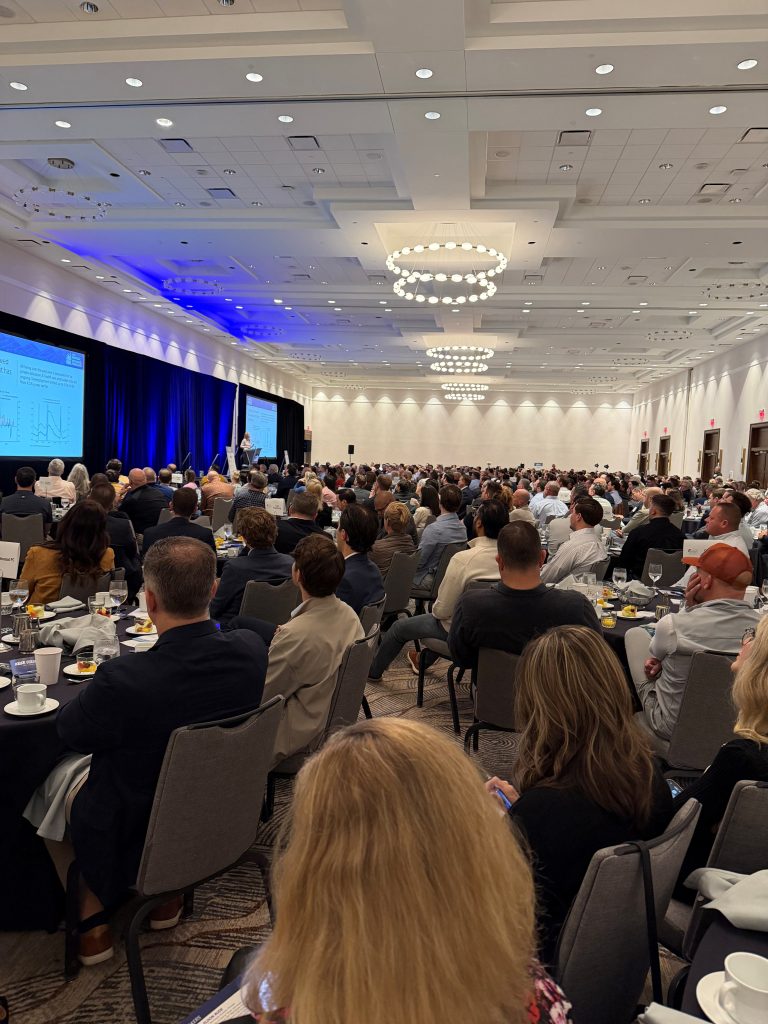
Home Builders Association (HBA) – 2026 Market Forecast
Key Takeaways & What They Mean for Austin Real Estate
I had the privilege of attending the HBA 2026 Forecast, and wanted to share several important insights from the speakers—both at the macro (national) and micro (Austin-specific) levels.
Macro Economic Outlook
The macro perspective was presented by Dr. Julia Coronado, PhD, with the Texas Real Estate Center.
One of the most striking shifts discussed was demographic:
The average age of a first-time homebuyer has increased to 38–39, up from 31 just ten years ago.
This reflects affordability pressures, delayed household formation, student debt, and longer career runways before homeownership.
From a broader economic standpoint:
The U.S. economy has been surprisingly resilient, but not without disruption.
In 2025, GDP growth outperformed the labor market.
Hiring slowed meaningfully, which matters because jobs drive housing demand.
Small and mid-sized firms have been shedding workers, hiring has narrowed, and unemployment has drifted higher.
At the same time:
Private education and healthcare continue to hire, even as government policy discussions point toward cost reductions in these sectors. The long-term impact on private employment remains uncertain.
Consumers, Wages, and the “K-Shaped” Economy
Wage growth is cooling, and consumer purchasing power is no longer expanding at prior rates—though there are signs of stabilization.
Consumers dislike uncertainty. Key questions households are asking themselves:
Do I expect a raise this year?
Do I feel confident in the economy?
Lower-income households are under significant pressure, while higher-income earners are driving a rebound in discretionary spending.
This creates a “K-shaped” economy:
Strong balance sheets at the top
Ongoing strain at the bottom
Household net worth remains high—but unevenly distributed
Policy, Inflation, and Global Risk
Tariffs function as a tax on consumers, as higher input costs are passed through from manufacturers.
Immigration policy affects housing in two ways:
Fewer buyers entering the market
Fewer legal workers available to build homes
(This was explicitly discussed in the context of legal labor.)
Globally, interest rates have risen, and there is growing concern that foreign governments may be less willing to hold U.S. assets.
The Federal Reserve’s independence—regardless of political administration—remains critical to maintaining foreign investment confidence.
Interest Rates & Home Prices
Austin home prices have corrected approximately 22% from 2022 to 2026.
The Fed is unlikely to cut rates meaningfully without a recession, largely due to inflation concerns.
At the same time:
The U.S. economy remains resilient
Tax policy and AI-driven productivity continue to support expansion into 2026
The outlook remains constructively cautious, but uncertain.
Austin-Specific Market Insights
Presented by Eldon Rude, Principal – 360 Real Estate Analytics
Early Warning Signals
If there are signs of a slowdown in Austin, the office market is the first place to look:
Office occupancy remains weak
Tech companies are largely on the sidelines
Rentals & Housing Affordability
Apartment rents have declined for 12 consecutive months
Concessions are widespread, putting pressure on single-family rental pricing
In 2025:
Median family income (Austin region): $133,800
Median home price (Q3 2025): $470,300
This results in a 3.5 price-to-income multiple
What that means:
< 3.0 → Very affordable
3.0–4.0 → Moderately affordable
4.0–5.0 → Stretched
5.0+ → Unaffordable
👉 At 3.5, Austin is not cheap—but not broken.
This helps explain why:
Homes are taking longer to sell
Buyers are cautious
Transactions are still happening
Builder Sentiment Heading into 2026
“Flat” is considered acceptable
Builders are focused on:
Improving margins
Reducing forward cost exposure
Limiting finished inventory risk
Key Factors Shaping 2026
Subdued tech job growth → fewer relocation buyers
Uncertainty around when cultural and discretionary buyers re-engage
Inventory remains elevated relative to demand
New lot deliveries are more expensive
Corporate scrutiny of Austin continues
Urban New-Home Market
Performance varies significantly by sub-market
Finished homes are selling and pricing has stabilized in many areas
Buyers are active—but highly selective
Lot prices continue to correct
Some builders have exited the market, though urban markets remain structurally viable long-term
Final Thoughts
We are now nearly four years into this market shift.
What changes in 2026?
Builders start fewer homes
Greater focus on margins over volume
Reduced under-construction and finished inventory
Gradual movement toward supply-demand balance
Market conditions will continue to vary sharply by sub-market
Policy measures to stimulate housing are likely
The Biggest Question:
Timing and magnitude of job growth recovery—especially in tech.
That answer will ultimately determine how quickly Austin transitions from stabilization to expansion.
